
Last updated on November 13th, 2026 at 05:03 pm
You turned the heat up two degrees. You added a second blanket. You still wake up at 3 a.m. with cold feet and a clammy back, wondering how it’s possible to be chilled and sweaty at the same time. If that sounds like your November, at what you’re lying on before you blame the thermostat.
Every mattress material handles heat and moisture differently. Some hold warmth and let moisture escape, some hold warmth and trap it, and others do neither, so you feel the cold coming up from underneath. It’s frustrating to spend money on bedding and still dread getting into bed. You shouldn’t have to choose between a bed that’s warm and a bed that’s dry.
Wool and latex sleep warmest without feeling clammy, because both insulate and breathe. Memory foam holds the most heat but can stiffen in a cold room and traps moisture against your body. An Innerspring feels the coolest of the four. A custom mattress can pair a wool or latex comfort layer with a breathable core, so you get warmth and dryness in the same bed.
We talk with cold sleepers all winter at our Marysville showroom, and the fix is rarely “more insulation.” Since 1962, we’ve built mattresses for Pacific Northwest bedrooms, and the materials that work here have to handle two things at once: cold air and damp air.
Why Does Your Mattress Feel Cold?
A mattress feels cold for one of three reasons: it lets your body heat escape, it pulls heat out of you through contact with a cold surface, or it traps moisture so you feel damp and chilled. Many “cold mattress” complaints come from the third one.
According to the Sleep Foundation, your core body temperature drops about 2°F overnight, and a bedroom near 65°F helps you fall asleep. That cool air is good. The trouble starts when the moisture you give off during the night (every sleeper releases some through breath and skin) gets stuck in the mattress instead of moving through it. Damp fabric pulls heat away from your skin far faster than dry fabric does. That’s the chilled-but-sweaty feeling.
The warmest mattress isn’t the one with the most insulation but the one that holds a layer of warm air around you while letting moisture out, which is why airflow matters as much as warmth.
Comfort layer: The comfort layer is the top 2 to 4 inches of a mattress, the part you feel first when you lie down. It has the biggest effect on how warm or cool a bed sleeps.
Which Mattress Materials Hold Warmth Best?
Wool and latex hold warmth best while staying dry; memory foam holds the most heat outright, and innerspring holds the least. The table below compares the four materials cold sleepers ask about most.
| Material | How It Handles Warmth | How It Handles Moisture | Best For |
|---|---|---|---|
| Wool (comfort layer or topper) | Traps a layer of warm air in the fibers | Absorbs moisture vapor and releases it; stays dry to the touch | Cold sleepers who also sleep clammy |
| Latex | Warm but not hot; open-cell structure keeps air moving | Breathes well; resists trapping moisture | Cold sleepers who want pressure relief without heat buildup |
| Memory foam | Holds the most body heat; contours tightly | Traps moisture against the body; can feel damp | Sleepers in a dry, well-heated room who want a hugging feel |
| Innerspring | Sleeps coolest; air moves freely through coils | Breathes very well | Hot sleepers, or cold sleepers who add a wool layer on top |
Wool is the standout for cold, damp climates. The Woolmark Company reports that wool can absorb up to 35% of its own weight in moisture vapor before it feels wet. (Woolmark is a wool industry group, so treat that as the industry’s own figure.) On a bed, that means a wool comfort layer pulls moisture off your skin while it holds warm air against you. It works in reverse in July, which matters if you don’t want a winter-only mattress.
Latex comes from rubber tree sap and has an open-cell structure (tiny connected air pockets) that lets air move through it. It feels warmer than innerspring because it conforms to your body and holds some warmth close, but it rarely gets the sticky, hot feel memory foam can.
Memory foam is the warmest material in the list, and for some people that’s exactly right. It molds tightly to your body, which traps body heat. The Sleep Foundation’s comparison notes that this close fit leaves little room for air, so heat and moisture build up. It sleeps warm, but not always dry.
Innerspring is the coolest of the four because air moves through the coils. On its own, it’s the wrong choice for a cold sleeper. Paired with a wool or latex comfort layer, it becomes a breathable base that keeps the warm layer dry.
Does Memory Foam Get Hard in a Cold Room?
Yes. Memory foam is temperature sensitive, and in a cold bedroom it firms up and responds more slowly until your body heat warms it. Foam is noticeably firmer on first contact in cold weather, with slower recovery when you move, and recommends keeping the room between 65°F and 75°F for normal feel.
That creates an odd winter trade-off. You keep the bedroom cool for better sleep, which is what the Sleep Foundation recommends, and your memory foam mattress feels like a plank when you first lie down. Then it warms up, softens, and starts trapping heat and moisture. Some people love that cycle. If you’re a side sleeper with sore hips, a stiff mattress at bedtime is a real problem.
Latex and wool don’t do this. Latex stays the same firmness whether your room is 60°F or 75°F. Wool is a fiber, not a foam, so there’s nothing to stiffen.
What Does Pacific Northwest Damp Cold Do to Each Material?
Damp cold is harder on a mattress than dry cold. A January night in Marysville or Everett might be 38°F and raining, with indoor humidity climbing every time someone showers or runs the kettle. The EPA recommends keeping indoor humidity below 60%, ideally between 30% and 50%, to limit mold. Many Puget Sound bedrooms run above that in winter.
Here’s how each material holds up in that air:
- Wool handles it best. It absorbs moisture vapor, holds it inside the fiber, and releases it when the air dries out. It also resists mildew.
- Latex breathes well enough to let moisture move through and out, as long as the base underneath isn’t a solid platform that blocks airflow.
- Memory foam struggles. It holds moisture in its cells, dries slowly, and can develop a musty smell over a damp winter on a solid platform bed.
- Innerspring stays dry inside because air moves freely, but the padding on top can still get damp if you sleep hot under heavy blankets.
If your bedroom faces the Sound or sits over a crawl space, this matters more than any firmness rating. A breathable base (slats instead of a solid deck) helps every material on this list.
How Does a Custom Build Combine Warm and Breathable Layers?
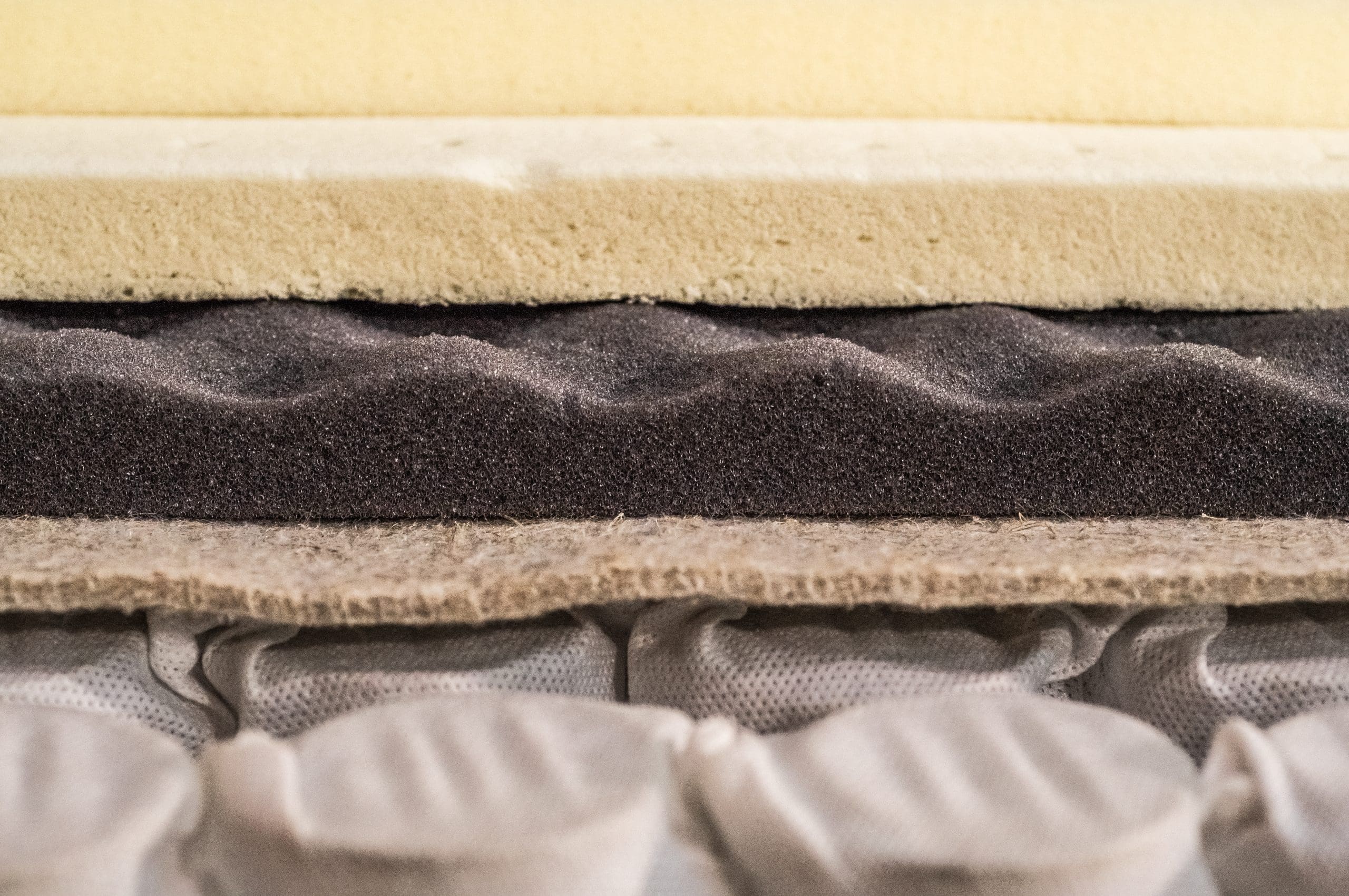
A custom mattress lets you put a warm material where you feel it and a breathable material where you don’t. Store-bought mattresses pick one feel for everyone; a custom build picks layers for you.
A typical cold-sleeper build from our Marysville factory looks like this:
Step 1: Choose a breathable core. Innerspring coils or a latex core keep air moving through the bottom of the mattress, so moisture has somewhere to go.
Step 2: Add a warm, dry comfort layer. A wool layer or a latex comfort layer on top holds warm air against you without trapping sweat. If you want the hug of memory foam, a thin memory foam layer under wool gives you the contour with less heat buildup.
Step 3: Pick a cover that breathes. A quilted cover with natural batting finishes the build. Avoid tight synthetic covers, which block the airflow you paid for.
The right combination depends on your body, your sleep position, and how cold your room runs. That’s why we ask you to come lie on the layers at our showroom before we build anything. Our post on the health benefits of sleeping on a custom mattress covers why fit matters as much as material.
Tell us how you sleep and how cold your room runs, and we’ll build a mattress to match. Call (360) 659-8458 or request your free custom quote.

What Happens If You Keep Sleeping Cold?
You keep adding blankets, which traps more moisture and makes the clammy feeling worse. You turn up the heat, which costs money and works against the cool room your body wants for deep sleep. Another winter of 3 a.m. wake-ups is a long time to wait for a fix that’s mostly a question of layers.
How Slumber Ease Builds a Mattress for Cold Sleepers
We know how discouraging it is to do everything right (thermostat, blankets, socks) and still wake up cold. We’ve built mattresses in Marysville since 1962, and Pacific Northwest winters have taught us which layers hold warmth without holding water. The process has three steps:
- Tell us what you need. Call (360) 659-8458 or fill out the quote form. Tell us how you sleep, how cold your room gets, and whether damp is part of the problem.
- We build your mattress. Hand assembled in our Marysville factory with the core, comfort layer, and cover chosen for you. Any size, including odd and antique frames.
- Sleep warm and dry. A bed that feels the same in January as it does in July.
Custom takes a little longer than ordering a box online, and we’ll tell you that up front. On the first cold night in your new bed, the room can stay cool while the mattress stays warm, and you sleep straight through. Explore our custom home mattress options to get started, or read our guide on how to care for your new mattress so it stays dry all winter.
Frequently Asked Questions
What is the warmest type of mattress?
Memory foam holds the most body heat, but wool and latex are usually the better choice for cold sleepers because they stay warm without trapping moisture. If you often feel cold and clammy at the same time, a wool comfort layer over a latex or innerspring core tends to feel warmest.
Is a wool mattress good for winter?
Wool is one of the better winter materials. It holds a layer of warm air around your body and absorbs moisture vapor so it stays dry to the touch. It also regulates in the other direction in summer, so a wool layer isn’t a winter-only choice.
Does a latex mattress sleep warm or cool?
Latex sleeps in the middle. It conforms to your body and holds some warmth close, but its open-cell structure keeps air moving so it rarely feels hot. For most cold sleepers, latex feels warmer than innerspring and drier than memory foam.
Why does my mattress feel damp in winter?
Moisture from your body and your breath is getting trapped in the mattress instead of moving through it. This is most common with memory foam, a tight synthetic cover, or a solid platform bed that blocks airflow underneath. A breathable comfort layer and a slatted base usually fix it.
Can a custom mattress be built for someone who sleeps cold?
Yes. A custom build can pair a warm comfort layer (wool or latex) with a breathable core and cover, in any size or shape. At Slumber Ease you can lie on the individual layers at the Marysville showroom before choosing, so the build matches your body and your room.
Talk to the people who build it. Call (360) 659-8458 or request your free custom quote.